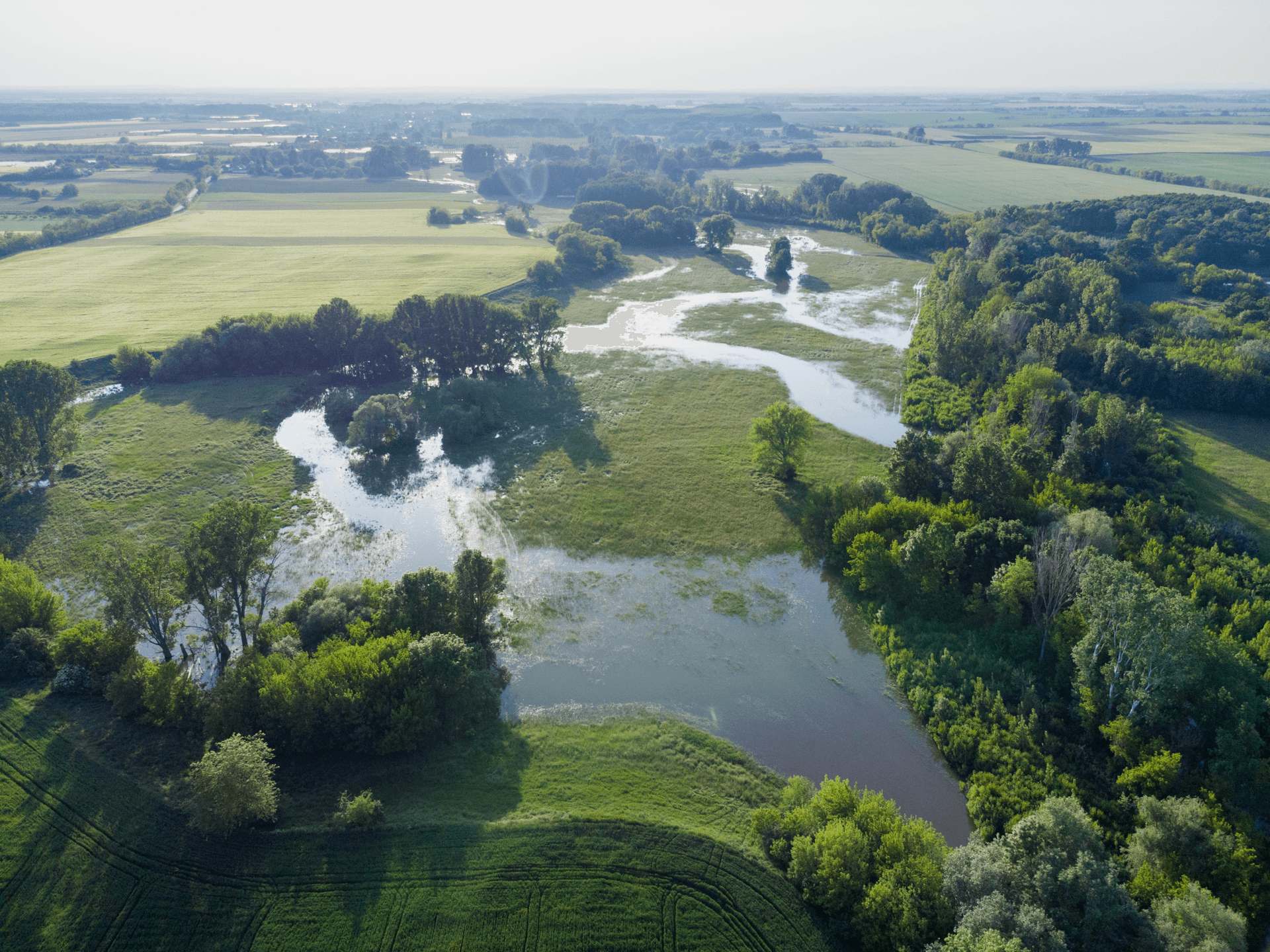
The landscape
Cereal, maize and sunflower dominate here, working at scale across the Pannonian lowlands. Fields typically run between 30 and 40 hectares, and the landscape has been reorganised over decades to make that possible.
The challenge
Hedgerows, field margins and wetlands were cleared to make way for larger fields. What was gained in efficiency was lost in structure: the small, untidy, in-between places where biodiversity actually lives.
Pollinators are declining. Soils are degrading. The landscape works well as a machine and poorly as an ecosystem, and the two are more connected than they appear.
What we explore
FIREFLIES looks at how semi-natural elements can find their way back into large arable landscapes without asking farmers to work against their own economics. Bringing back hedgerows and margins, introducing legumes into rotations, reconsidering field size.
The question underneath all of it is which CAP instruments, from AÖP to AKG and beyond, could actually make that shift viable. Restoration that does not pay does not last.